TECHNOLOGY
Overview of the Technology
Altach Biomedical’s technology has been featured in several leading peer-reviewed scientific journals, highlighting the strength of its foundational research and the clinical promise of its ECM-based platform.
These publications reflect over a decade of work in tissue engineering and regenerative medicine, and underscore the scientific rigor and innovation driving Altach’s approach to cartilage repair and joint preservation. In line with Altach’s commitment to open science, all publications are available through open access, ensuring that the research is freely available to clinicians, scientists, and the broader public.
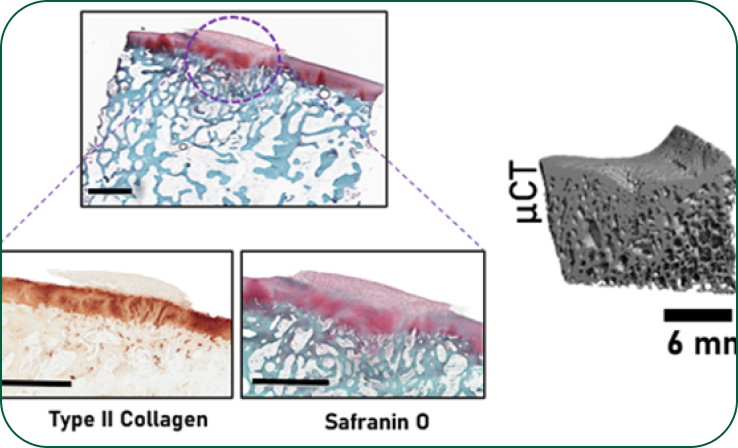
Bi-layered ECM Scaffolds for Osteochondral Defect Repair
A recent peer-reviewed study published in Acta Biomaterialia highlights the potential of Altach Biomedical’s extracellular matrix (ECM)-based biomaterials in cartilage repair.
 Download PDF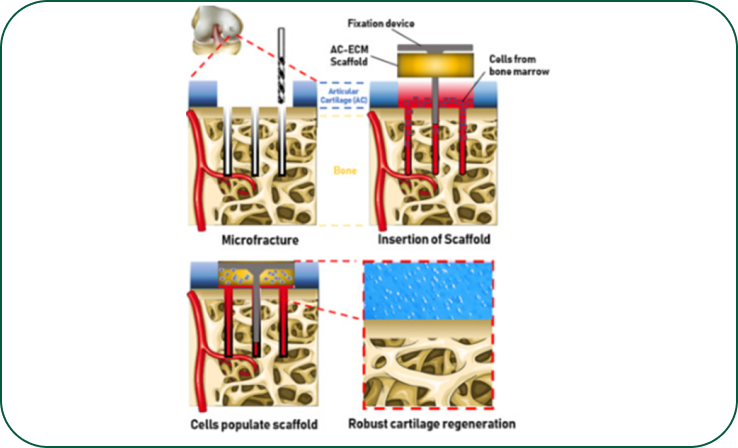
Altach AC-ECM Scaffolds for chondral defect repair versus the current clinical standard of care, microfracture
Cell free ECM-based scaffolds outperform microfracture in preclinical cartilage repair model using a novel fixation approach.
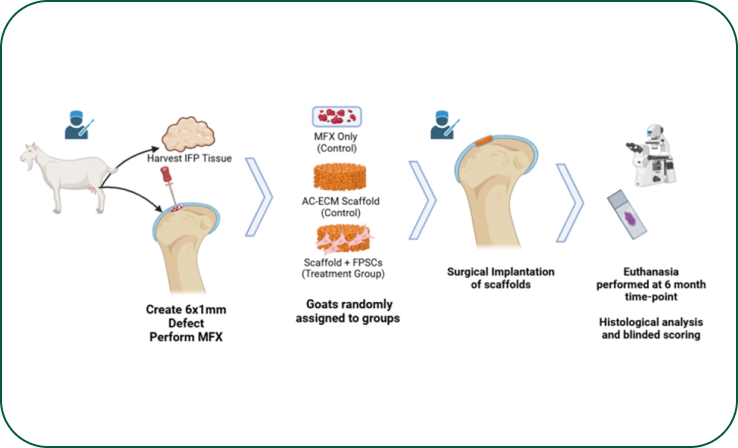
Combining Altach’s AC-ECM scaffolds with rapidly isolated cells
Preclinical study demonstrates the potential of rapidly isolated fat pad cells in conjunction with ECM scaffolds for advancing single-stage cartilage repair.
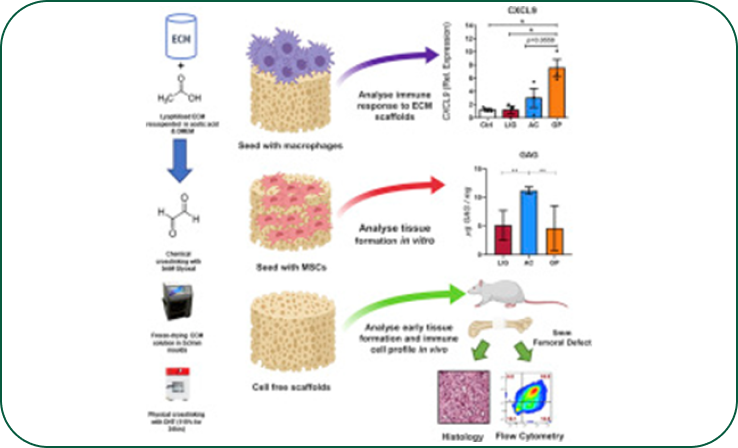
AC-ECM Scaffolds Promote Regenerative Macrophage Phenotype and Chondrogenic Differentiation
ECM source influences macrophage phenotype and stem cell differentiation, driving targeted tissue regeneration in preclinical models.
Key Features
Key Features
Altach Biomedical have developed the world’s first joint tissue specific, bi-layered extracellular matrix (ECM) derived regenerative implant to delay the onset of knee osteoarthritis by treating underlying osteochondral defects of varying sizes and depths within the joint. The top layer of this bi-layered implant consists of cartilage ECM rich in type II collagen and a bottom layer derived from bone ECM.

Composition
First regenerative biomaterial scaffold derived entirely from the ECM of articular cartilage (primarily type II collagen) and bone ECM; the tissues the Altach scaffold aims to regenerate

Single stage procedure
Can be used as a standalone, off-the-shelf product or combined with cells/biologics at the point of care

Physical Characteristics
Optimal pore architecture for enhanced cellular infiltration and directed tissue development. The highly elastic properties of the scaffold allow for a press fit implantation procedure

Ease of use
Our scaffold technology will be supplied with novel surgical tools and implantation devices that improve the accuracy and efficiency of implantation procedures, helping surgeons achieve better outcomes with greater confidence

Efficacy
Restores hyaline-like cartilage and efficacy already demonstrated clinically relevant in large animal models. Our technology offers true regeneration of damaged tissues not just temporary repair

Competitive advantage
The Altach scaffold offers significant benefits over existing solutions (scaffolds and cell-based therapies) for osteochondral defect repair. Most scaffolds currently used in cartilage repair are derived from type I collagen, which unlike type II collagen does not inherently promote new cartilage tissue formation.